by Kistin Supernault Garcia, B.Ed., M.Ed., Canadian Certified Counsellor
For some children, going back to school isn’t just “going back to school.” It’s a big transition from a familiar, low-demand environment into a world of academic, social, sensory, and emotional demands.
For neurodivergent children especially, this can show up not only as anxiety, but as irritability, meltdowns, restlessness, avoidance, or defiance in the days leading up to the first day of school but even in those first few weeks of school too.
Here are a few ways parents can help:
1. Scaffold routines-from Together to On My Own
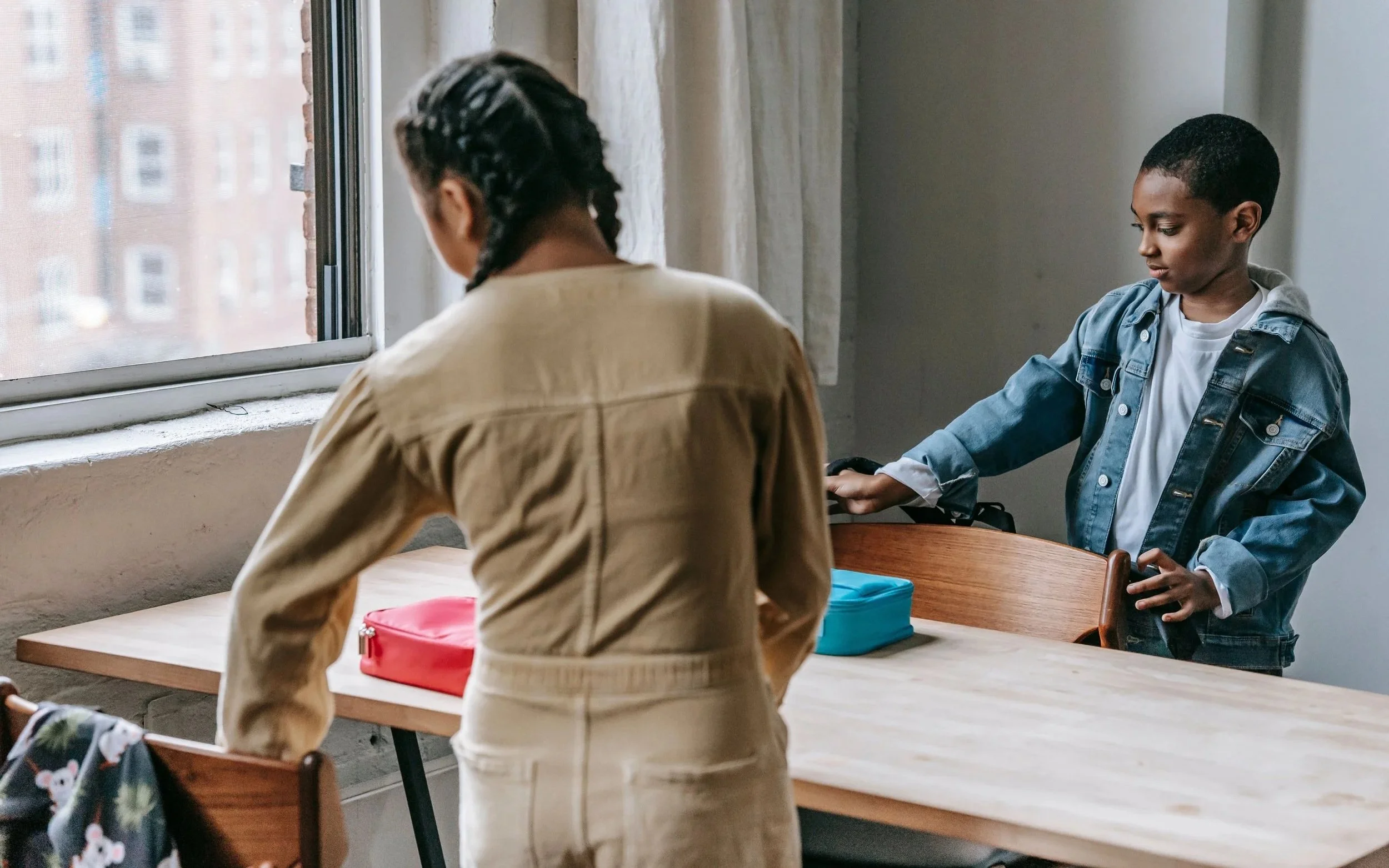
Create and practice the morning routine together for the first while. If possible, practice choosing clothes, getting dressed, eating breakfast, packing a bag, and getting out the door together. Gradually begin shifting to having your child begin to do some pieces independently, but make it fun! Maybe you do one step together, one step alone, next step together, etc. Maybe you and your child create a playlist of their favourite songs, one for each step (great for cueing transitions!). Having a checkmark chart where your child can mark off as they accomplish each task can build a sense of pride and independence. Daily praise and a small reward for their efforts at the end of the week can go a long way to help motivate your child too!
PS: Don’t forget to make that routine visual! Post it up on the fridge or bedroom door!
2. Add structure to the school day
Now that you and your child have an idea of what will happen each day, help your child to create a visual schedule of their school week. You can ask your child’s teacher to provide you with a copy of the classroom timetable. Make sure to add school start and finish, recess and lunch times. Add the subjects so they can clearly see when gym days are, when library book exchange is, etc. We know visual schedules can provide the much-needed structure and predictability our neurodivergent kids often need.

3. PREP, PREP, PREP!
Talk through what the school day looks like and answer some common questions they may have, such as: Where do I go? → Who will I see? → How do I find out what class I’m in? → What do I do if? - What if something goes wrong?
Take this first week of school to practice the tricky parts together! Discuss situations such as meeting a new teacher or peer, asking for help, joining a group, starting a conversation with a peer, and/or how to ask for a break if they feel overwhelmed. Keep it playful by doing a role-play with their stuffed animals or toys to help them practice what they can do or say. For older kids, practice new experiences together - like walking to school on their own, taking the bus on their own, etc.
5. Validate their feelings – Don’t over-reassure
Instead of: “Don’t worry! It will be fine!”
Try: “It makes sense that you’re feeling _____. A lot is changing, and we can figure out what might help together.”
This helps children learn that anxiety is uncomfortable, but not something they need to fear or avoid. With support, they can learn to move through it.
6. Connection before correction
When big feelings show up, remember that your child’s behaviour may be communicating uncertainty or overwhelm. Before jumping to correction, help your child feel safe and supported.
Try: “I can see this is really hard right now. Let’s take a minute together, and then we can figure out what you need.”
(Stay tuned for a later post to learn more tips on how to co-regulate with your child!)
Remember: The goal isn’t to make your child feel zero anxiety. It’s to help them feel prepared, supported, and capable of handling the transition.