
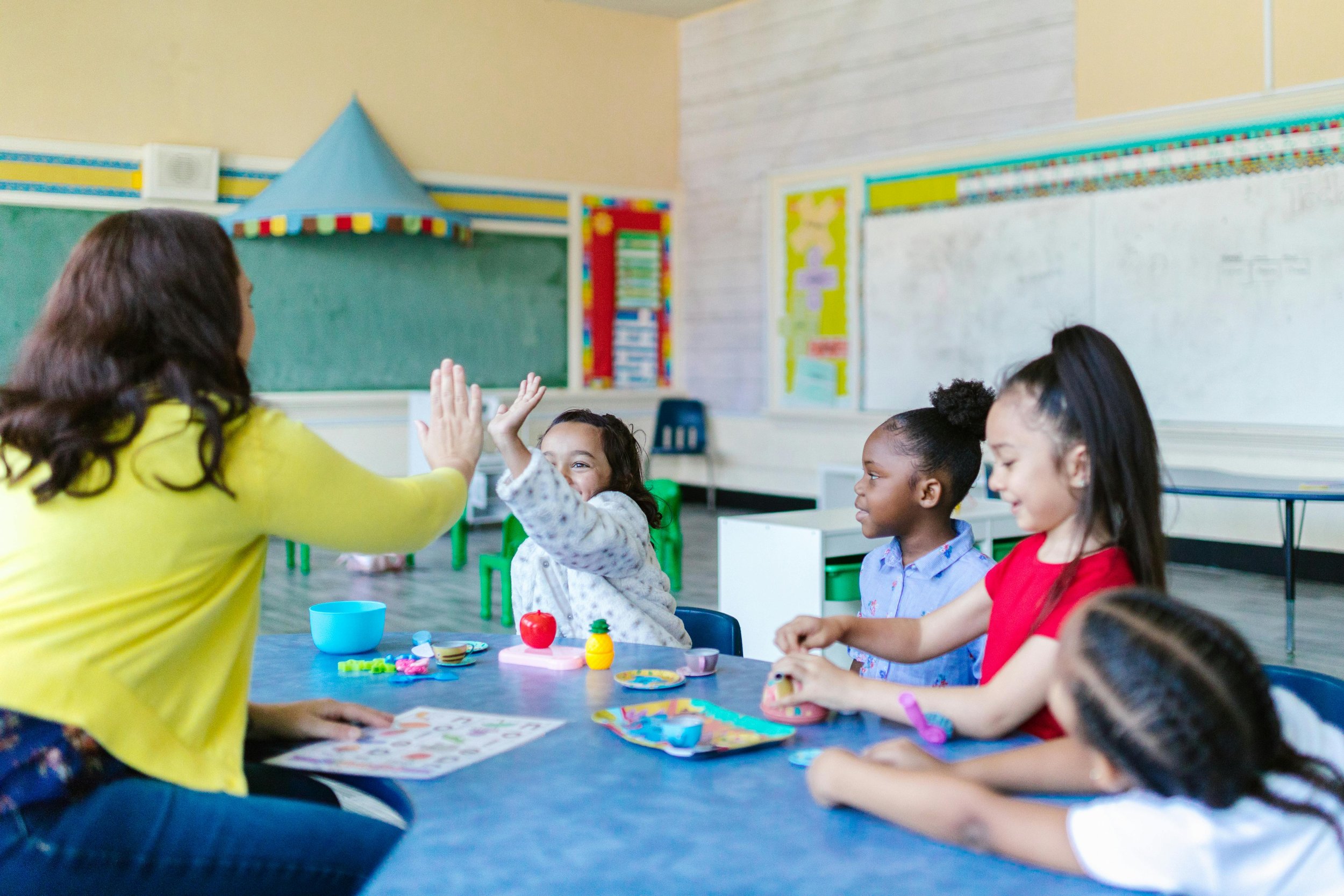
Designed for children who have difficulty interacting successfully with others due to social skill deficits.
Training in Core Social Skills
Program Overview
Level 1: The Hidden Conversation
Children can have difficulty interacting with others because they miss the subtle nuances of social interaction, or what we call social cues. They hear the words people say but don’t understand the full message because they do not understand the “hidden conversation” that is part of the message that includes all the nonverbal ways we communicate. They also may be unaware of the subtle messages they send, unintentionally, through their body language or tone of voice.
Our goal is to help children enhance their ability to interact with others by learning the importance of nonverbal communication and how “hidden” messages are sent to us and by us. Children will become more proficient at responding appropriately to these messages, as well as sending messages that help them interact more successfully with others.
Skills Developed:
Learning vocabulary for feelings and how they are communicated.
Recognizing, understanding and responding to nonverbal and contextual cues from others (body language, facial expression, etc.).
Recognizing and using voice cues such as tone and volume to communicate effectively.
Looking at our own nonverbal communication and recognizing how it can affect the messages we send and how others receive them.
Understanding how our messages and behaviour can positively or negatively affect our ability to build social relationships.
Level 2: Successful Communication
Some students have difficulty interacting with others because they have not developed effective communication skills. They may have difficulty listening and responding appropriately to others to keep the conversation “flowing”. Students may also have difficulty knowing how to initiate conversations or join in those that are already ongoing. They may not understand “conversational manners” that make the conversation a positive experience for both parties. Perhaps they have difficulty knowing how to express emotions and needs effectively. They may experience anxiety and withdraw from social experiences, or peers may withdraw from them.
Skills Developed:
Conversations (initiating, listening, interrupting, staying on topic, conversational manners)
Offering and asking for help; Asking questions
Joining in; Including others
Expressing emotions and needs in an effective way
Understanding figurative speech (sarcasm, irony, similes, metaphors, etc.)
Level 3: Positive Peer Interaction
This program is for students who would like to gain greater self-control within themselves with emotions and handling difficult situations. They may not know how to handle problems involving peers or be able to engage in effective conflict resolution.
So they may react passively, without their needs being met, or they may act aggressively, trying to solve problems and have their needs met in a way that might distance themselves from their peers. They may not be aware of the power that they truly possess, or the steps, to manage their own emotions and situations effectively and successfully, which in turn creates stronger, more positive social relationships.
Skills Developed:
Dealing with feelings (anger, fear/anxiety, disappointment, failure, humour, embarrassment)
Understanding the feelings of others
Recognizing stress signs and causes; Self-monitoring stress levels; Stress prevention
Positive thinking–the connection between our thoughts and our feelings
Being assertive
Accepting consequences
Problem-solving and conflict resolution (negotiating, compromising, cooperating, etc.)
Dealing with teasing, peer pressure
Self-control
Training in Core Social Skills Program FAQs
-
The ultimate goal of the Training in Core Social Skills Program is to help children build confidence and skill in positive social interaction.
To achieve this overarching objective, our program is structured around specific goals designed to foster greater skill and assurance in interpersonal exchanges:
Goal 1: Turning outward to others involves considering their perspectives, understanding their needs and expectations, interpreting their nonverbal cues, and reflecting on one's own behaviors in relation to others. For example, asking questions like, "How might my actions or words affect this person's feelings?" or "How will this person interpret my nonverbal cues such as my facial expression, the tone of my voice, etc., and how will that make them feel with me?"
Goal 2: Understanding and executing micro social skills that promote comfort in others and enhance the child's confidence in social interactions. Examples include making eye contact, greeting others, adjusting voice volume appropriately, initiating conversations, etc.
Goal 3: It's crucial to help children recognize their social functioning successes and difficulties, and to establish personal goals they can work towards daily and weekly. This ensures that the learning process is meaningful and tailored to their individual needs.
-
To initiate the registration process, a 30-minute phone call intake with the child's legal guardians is required. This intake appointment is designed to collect essential information about the child and identify the most appropriate program or service to address their needs.
After the intake interview, our clinicians will carefully review all the gathered information, including any relevant details or documents you provide. Based on this comprehensive evaluation, we will provide recommendations for the most suitable program or service for the child's needs. These personalized recommendations will be directly provided to you by our program coordinator.
-
Yes, absolutely! Parent involvement is a crucial aspect of our program. We understand the significance of a collaborative approach to a child's social development. Our programs are specifically designed to include and support parents through dedicated parent sessions for each Level. These sessions aim to familiarize parents with our program philosophy and coach them on utilizing effective techniques to support their child's social growth.
Additionally, we extend an invitation to parents to involve their child's teacher in the learning process. This is especially emphasized in the first session of each program Level, allowing teachers to grasp our coaching techniques and contribute to the child's social development within the school setting. We believe that this collaborative effort between parents and teachers enhances the overall impact of our Training in Core Social Skills program.
-
Participating in the Training in Core Social Skills program can provide numerous gains for your child:
✓ Heightened self-awareness: Understand their feelings and behaviors, including nonverbal cues.
✓ Enhanced empathy: Better grasp the emotions and needs of others.
✓ Increased social awareness: Recognize expected behaviors in social settings.
✓ Boosted confidence: Interact confidently, putting others at ease.
✓ Reduced anxiety: Feel more comfortable in social situations.
✓ Fostering belonging: Develop a sense of acceptance and connection with peers.
✓ Improved understanding by parents and teachers: Gain insights into your child's social development.
✓ Empowered parenting: Feel supported and skilled in coaching your child's social growth.
-
Yes, our programs are considered as Psychological Services. If you have extended health insurance, you may be eligible for reimbursement. Please verify with your insurance provider for details.
-
Our program is neurodivergent affirming. Our aim is to teach skills that will help your child feel more connected and successful in social interaction, while helping them to also understand themselves and their own needs so that they may develop skills in a way that feels comfortable and aligned with their identity.